
Day 11 – Covenant and Courage
From Waiting to Walking
However you can engage today, we’re here. Read, listen or both.
The written portion gives an overview, with verses broken down into smaller bites, and journaling/prayer prompts for reflection. In the podcast, Steve Traylor reflects on today’s passage with Scripture reading, a deeper pastoral teaching, and prayer (about 15 minutes). Perfect for morning coffee, commutes, or when your eyes need a rest.
Genesis 8:1–22
The flood has come. The world has drowned.
But now—silence.
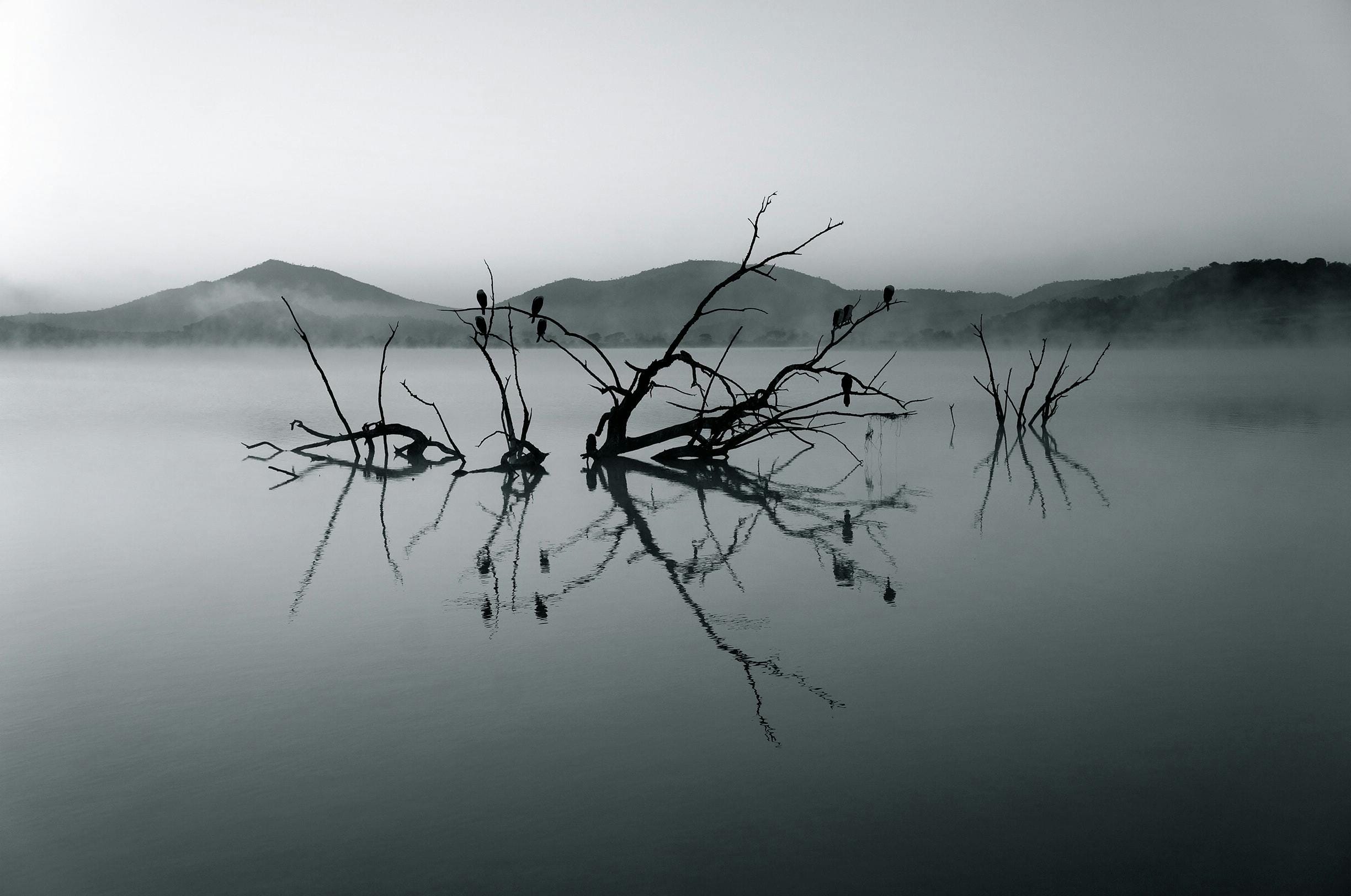
The ark rocks on endless waters. Inside, Noah and his family wait in near-darkness—day after day, week after week, month after month. Outside, nothing changes. The horizon remains unbroken. The rain has stopped, but the waiting hasn’t.
If you know what it’s like to survive something terrible only to find yourself stranded in the aftermath—if you’ve been waiting so long you’ve begun to wonder if God has forgotten you—this day is for you.
Because today we encounter two words that change everything:
“God remembered.”
1. Not Forgotten, But Held
Genesis 8:1–5
¹ God remembered Noah, and every living thing, and all the livestock that were with him in the ark. God made a wind to pass over the earth. The waters decreased. ² The deep’s fountains and the sky’s windows were also stopped, and the rain from the sky was restrained. ³ The waters receded from off the earth continually. After one hundred fifty days, the waters decreased. ⁴ The ark rested in the seventh month, on the seventeenth day of the month, on the mountains of Ararat. ⁵ The waters decreased continually until the tenth month. In the tenth month, on the first day of the month, the tops of the mountains became visible.
“God remembered Noah.”
Not “Noah finally got God’s attention.” Not “Noah’s prayers worked.” Not “God came back from wherever He’d been.”
God remembered.
This Hebrew word—zakar—doesn’t mean God forgot and then recalled something. It means God acted on His prior commitment. He moved in faithfulness to what He’d already promised.
God didn’t need Noah to remind Him. He wasn’t distracted. He wasn’t absent.
He was—and always had been—sovereignly present, keeping covenant even in the flood.
And when God remembers, things change.
A wind comes. The fountains of the deep close. The rain stops. The waters begin their slow, relentless recession.
Notice: this is not instant.
The Bible says “after one hundred fifty days, the waters decreased.” Five months. Waiting. Rocking. Hoping.
Then another two and a half months before the mountaintops appear.
God acts—but not always quickly by our standards.
For those enduring the slow recession of grief, the gradual lifting of depression, the inch-by-inch recovery from illness or loss: you are not imagining the slowness.
It is real.
But so is God’s faithfulness.
The waters are receding. You may not see it yet. But God has not forgotten you. He is acting—steadily, sovereignly, faithfully.
Journaling/Prayer: Where do you feel forgotten by God? Name it specifically—not in generalities, but with the honest pain of someone who’s been waiting too long.
If the waiting feels unbearable, tell Him that.
You can say: “Lord, I don’t understand the wait. I’m struggling to trust Your timing. Please help me believe You haven’t forgotten me.”
God invites honest prayer—not accusation, but the kind of raw petition we see in the Psalms.
And even now, even as you wait, He is remembering you. The waters are already receding—whether you can see it or not.
2. Watching for Signs
Genesis 8:6–12
⁶ After forty days, Noah opened the window of the ark which he had made. ⁷ He sent out a raven. It went back and forth until the waters were dried up from the earth. ⁸ He sent out a dove from him, to see if the waters had decreased from the surface of the ground. ⁹ But the dove found no resting place for the sole of her foot, and she returned to him into the ark, for the waters were on the surface of the whole earth. He put out his hand, and took her, and brought her into the ark to himself. ¹⁰ He waited yet another seven days, and again he sent the dove out of the ark. ¹¹ The dove came back to him at evening, and behold, in her mouth was a freshly plucked olive leaf. So Noah knew that the waters had receded from the earth. ¹² He waited yet another seven days, and sent out the dove. She did not return to him anymore.
Noah can see the mountaintops now.
But he doesn’t rush out.
He waits. He tests. He sends a raven—it flies back and forth, finding no solid ground. Then a dove. It returns empty. He waits another seven days. Sends it again.
This time—an olive leaf.
Not dry land yet. But a sign. A promise. Life returning.
He waits another seven days. Sends the dove again. This time, she doesn’t return.
Waiting is not passive resignation.
Waiting is active faithfulness—watching, testing, looking for signs that God is moving.
If you are in a season of waiting—waiting for healing, waiting for clarity, waiting for relationships to mend, waiting for the numbness to lift—you are not doing nothing.
You are watching for olive leaves.
You are asking: Is it safe yet? Is it time to step out? Can I begin to hope again?
That is not weakness. That is wisdom.
And when the olive leaf comes—when you see one small sign that God is at work—you don’t have to rush. You can continue to watch. You can test again.
God is patient with your caution.
Journaling/Prayer: What would an “olive leaf” look like for you—a sign that God is moving, that life is returning, that it might be safe to hope again?
If you can name it, ask God for it.
And if you can’t name it—if you’re too numb or too hurt to even imagine what hope would look like—tell Him that too.
Say: “I don’t even know what to hope for anymore. Show me something. Anything.”
He will. In His time. And when He does, you’ll know it.
3. Stepping Onto Dry Ground
Genesis 8:13–19
¹³ In the six hundred first year, in the first month, the first day of the month, the waters were dried up from the earth. Noah removed the covering of the ark, and looked. Behold, the surface of the ground was drying. ¹⁴ In the second month, on the twenty-seventh day of the month, the earth was dry. ¹⁵ God spoke to Noah, saying, ¹⁶ “Go out of the ark, you, your wife, your sons, and your sons’ wives with you. ¹⁷ Bring out with you every living thing that is with you of all flesh—the birds, the livestock, and every creeping thing that creeps on the earth—that they may breed abundantly in the earth, and be fruitful, and multiply on the earth.” ¹⁸ Noah went out, with his sons, his wife, and his sons’ wives with him. ¹⁹ Every animal, every creeping thing, and every bird—everything that moves on the earth—went out by families out of the ark.
The ground is dry.
Noah can see it. But still—he waits.
He doesn’t leave until God says: “Go out.”
And when God speaks, the command is clear: Go out together. Take your family. Take the creatures. Fill the earth. Be fruitful. Multiply.
The flood brought death and isolation.
God’s restoration brings life and community.
Noah doesn’t step out alone. He steps out with those who survived with him. They go out not to hide, not to barely exist, but to rebuild, to flourish, to fill the earth with life again.
For those who have been isolated by grief, illness, or trauma—for those who have learned to survive alone because connection felt too risky—God’s call is not just “survive.”
It is: “Live. Connect. Create. Flourish.”
That may feel impossible right now.
You may look at the devastated landscape of your life and think: There’s nothing left to build with.
But God sees dry ground.
He sees possibility. He sees new beginnings. And He is calling you—not alone, but with others—to step out and begin again.
Journaling/Prayer: What would it mean for you to “step out of the ark”—to move from survival mode into living again? What is one small step you could take toward reconnection, hope, or rebuilding?
If the very idea terrifies you, tell God that.
Say: “I can’t imagine stepping out. I’m afraid there’s nothing out there for me.”
And then ask: “Will You go with me? Will You show me it’s safe?”
He will. Not by removing all risk. But by walking with you. One step at a time.
4. Worship and Promise
Genesis 8:20–22
²⁰ Noah built an altar to Yahweh, and took of every clean animal, and of every clean bird, and offered burnt offerings on the altar. ²¹ Yahweh smelled the pleasant aroma. Yahweh said in his heart, “I will not again curse the ground anymore for man’s sake, although the imagination of man’s heart is evil from his youth. Neither will I ever again strike every living thing, as I have done. ²² While the earth remains, seedtime and harvest, cold and heat, summer and winter, and day and night will not cease.”
The first thing Noah does on dry ground is not build a house. Not plant a field. Not secure his family’s future.
He builds an altar.
He offers sacrifice. He worships.
And God responds with a covenant—not just for Noah, but for all creation:
“I will never again destroy every living thing. As long as the earth remains, seedtime and harvest, cold and heat, summer and winter, day and night will not cease.”
God establishes rhythm. Order. Predictability.
After chaos, God gives stability. After judgment, God gives promise. After destruction, God gives seasons.
This is not a promise that suffering will end. It is a promise that the world will not end.
There will be winter—but spring will come. There will be night—but morning will break. There will be seedtime—and there will be harvest.
For those who have survived their own flood—those who feel like they’re standing on devastated ground, wondering if anything will ever grow again—hear this:
God has established seasons.
Your winter is not permanent. Your night is not endless. Your grief is not the final word.
Seedtime and harvest will continue. You can plant. You can hope. You can believe in a future.
But notice: Noah’s first act is worship.
Not because everything is fixed. Not because the world is perfect again. But because he survived. Because God remembered. Because there is dry ground beneath his feet.
Sometimes the most courageous thing you can do is simply say: “Thank You, God, that I’m still here.”
That is worship.
And God receives it as a “pleasant aroma”—not because of eloquence or emotion, but because it is the honest offering of a broken survivor who refuses to stop believing.
Journaling/Prayer: What would it mean for you to build an altar today—to offer worship not because everything is okay, but because you’re still alive, still breathing, still here?
This doesn’t have to be elaborate. It might just be saying out loud: “God, I survived. Thank You.”
Or: “God, I don’t understand Your purposes in this. But I’m still showing up. That’s all I have.”
That is enough.
Offer it. Let Him receive it. And trust that He is making a covenant with you—not that you’ll never suffer again, but that the seasons will continue, and one day, you will harvest what you’re planting now in tears.
Summary
The flood ends not with drama, but with waiting.
God remembers. The waters recede—slowly. Noah watches for signs. God calls him out—gently. And Noah’s first act is worship.
Then God makes a promise: the world will have seasons. Suffering will come, but so will relief. Winter will give way to spring. Night will give way to morning.
This is the rhythm of restoration.
For those who are waiting—still in the ark, still watching the waters, still looking for olive leaves—you are not forgotten.
God sees you. He is acting. The waters are receding, even if you can’t see it yet.
And one day—perhaps sooner than you think—He will call you out. Not to a perfect world, but to dry ground. To new beginnings. To seasons of planting and harvest.
And the first thing He’ll ask is simple: Will you worship?
Will you offer what little you have left?
Will you trust that seedtime and harvest will not cease?
Action / Attitude for Today
Today, practice one of two things—depending on where you are:
If you’re still in the “ark season” (waiting, grieving, numb, isolated):
Send out your dove today.
Look for one small sign that God is at work. It might be:
A moment of unexpected peace
A kind word from someone who sees you
A small shift in perspective
A flicker of hope you didn’t have yesterday
Don’t force it. Just watch for it. And if you don’t see it today, that’s okay. Try again tomorrow.
If you’ve already stepped out of the ark (beginning to engage with life again, starting to rebuild):
Build an altar today.
Offer something to God—even if it’s small:
Five minutes of honest prayer
A simple “thank You” for one thing
A choice to show up when you’d rather hide
A recognition that you’re still here, still breathing
Choose today to watch for God’s movement—not because you’re strong, but because He is faithful.
And if today you can’t do any of this—if you’re too tired, too numb, too broken—then simply notice this:
You survived today. You’re still here.
That is enough. God sees it. And He is still working, even when you can’t feel it.
The waters are receding. The seasons will turn. The ground will dry.
And one day, you will step out into a new beginning.
The Bible for the Broken is published by Aurion Press LLC. © Aurion Press LLC. All rights reserved.